
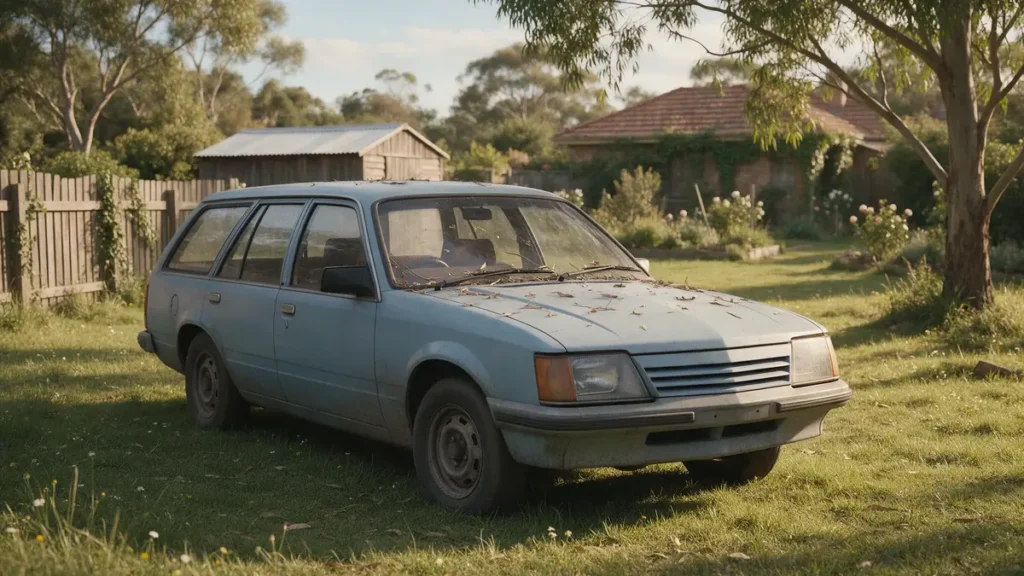
You can legally sell an unregistered car in Victoria. The car does not need registration or a roadworthy certificate to change hands. The buyer takes on the job of registering it, and until then the car cannot be driven on a public road without a permit.
That last point shapes the whole sale. An unregistered car has to be stored on private property, moved by tow truck or trailer, or driven only under a short-term permit. Plan how the car will leave before you agree on a buyer, and the rest of the sale is paperwork.
What “unregistered” means for a car in Victoria
A car is unregistered when it has no current registration with VicRoads. That happens in three common ways, and each one affects how you sell.
- Expired registration. The owner stopped paying the renewal. VicRoads notes on its selling interstate page that once a registration has been expired for three months, it is cancelled automatically.
- Cancelled registration. The owner cancelled it, often to claim a refund before a sale, a long storage period or a write-off.
- Never registered in Victoria. For example, a car brought in from interstate or bought as an unregistered project.
Whatever the cause, the rule for the road is the same. VicRoads’ renewal page warns that heavy fines apply if you drive an unregistered vehicle. That means no “one last drive” to the buyer’s house unless you have a permit.
You can check the car’s status for free with the VicRoads registration check, using the plate number or VIN. It shows whether the car is registered, the expiry date and any sanctions.
Do you need a roadworthy to sell an unregistered car?
No. Consumer Affairs Victoria’s page on unregistered vehicles states that if a car is unregistered or its registration has been cancelled, it can be sold without a roadworthy certificate. The buyer is then responsible for a new RWC, new registration and new plates.
The roadworthy rules only bite when a registered car is sold privately. If your car is still registered and you are weighing up whether to get a certificate, our guide on how to sell a car without an RWC in Victoria compares that choice in detail.
How to sell an unregistered car in Victoria, step by step
The order matters. Follow these steps so the car is legally yours to sell and no fines follow you afterwards.
- Confirm the registration status. Run the free VicRoads check. If the car still shows as registered, decide whether to cancel it before the sale.
- Cancel any remaining registration. You can do this in myVicRoads. VicRoads’ cancellation page explains that you may get a refund for the unused time, less a $22.10 processing fee and 10% of the TAC fee.
- Deal with the number plates. VicRoads no longer needs the plates returned. For a refund, a photo of the plates cut in half is accepted as evidence. Custom plates you want to keep need a phone call or a visit to a service centre.
- Check for money owing. A $2 PPSR vehicle search shows whether the car is recorded as free from debt. A lender with a security interest can pursue the car after the sale, so clear any finance first.
- Write a sale receipt. Because there is no registration to transfer, your receipt is the key record. Include the date, price, both parties’ names, addresses and signatures, and the car’s make, model and VIN.
- Arrange how the car leaves. Agree whether the buyer will tow it, trailer it or drive it under a permit. The options are below.
- Keep copies. Hold onto the receipt, the cancellation confirmation and any payment record.
If the car was still registered on the day of sale and you did not cancel it, you must instead complete a notice of disposal within 14 days. That is a registered sale, and a private buyer would need a current RWC.
Moving an unregistered car: permit, trailer or tow truck
This is where most unregistered sales stall. The car cannot simply be driven away. Victoria allows three legal ways to move it.
Option 1: an unregistered vehicle permit (UVP)
An unregistered vehicle permit lets someone drive an unregistered car on public roads for a stated purpose. Transport Victoria’s unregistered vehicle permits page sets out the rules:
- Purpose. Permits cover preparing a car for registration (repairs, an RWC test, a trip to VicRoads) or a single one-off trip. They cannot be used for social or domestic driving.
- Length. A single-trip permit runs from 1 to 7 days, by the most direct route only. A permit to prepare a car for registration runs from 1 to 28 days.
- Hours. The car can only be used on the road between sunrise and sunset.
- Safety. The driver must declare the car is safe for the road. A permit cannot be issued if the car is recorded as a statutory write-off, recorded as stolen, under a Sheriff’s sanction, or suspended for an unrepaired safety issue.
- Cost. The fee depends on duration, vehicle type and garage address, and it includes a Transport Accident Commission (TAC) charge for compulsory injury cover. No concessions apply.
- Plates and display. Number plates must be removed. A printed permit goes on the lower near side of the windscreen. An electronic permit must be shown to police on request.
Buy permits only from the official VicRoads site. VicRoads’ permit page warns that unauthorised third-party websites have been selling permits at inflated prices.
A permit suits a buyer who wants to drive the car to a mechanic or tester. It does not suit a car that is unsafe, will not start or has been written off.
Option 2: towing it behind a registered vehicle
Transport Victoria allows an unregistered car to be towed behind a registered vehicle without a permit, but only under strict conditions:
- the driver of the towing vehicle holds a full licence or a P2 probationary licence (P1 drivers face extra limits)
- a flag at least 30 cm square is tied to the rope, chain or wire
- the gap between the vehicles is no more than 4 metres
- if using a rope, chain or wire, the towed car’s brakes must work
- a licensed driver sits behind the wheel of the towed car
That last rule rules out many old or broken cars. If the brakes or steering are not reliable, rope towing is not a safe or lawful choice.
Option 3: a trailer or towing company
Loading the car onto a car trailer or a tow truck avoids the permit and the rope-tow conditions. It is the usual method for cars that do not run, have flat tyres or failed safety items.
When you sell to a car buyer that collects, this step is handled for you. Our junk car towing and pickup service works this way for cars that cannot be driven.
Do not leave an unregistered car parked on the street
Many owners stop paying rego and leave the car at the kerb while they look for a buyer. In Melbourne that is a risk. The City of Melbourne’s abandoned vehicles page states that the council can remove any unregistered vehicle parked on a public road or council land.
The council process involves an owner search, a notice on the car and a letter to the last registered owner. If nothing changes, the car may be towed and impounded. The council also notes that a car being prepared for registration or sale must be parked on private property. An unregistered vehicle permit is not a licence to park on the street.
Other Victorian councils, such as Hobsons Bay, Wyndham and Whittlesea, publish similar abandoned vehicle processes. If your car is on the street now, move it onto a driveway or into a garage, or sell it before a notice appears.
Who buys unregistered cars, and which suits yours
Three types of buyer take unregistered cars. The right one depends on the car’s condition and how much effort you want to put in.
| Buyer | Best for | What to expect |
|---|---|---|
| Private buyer | A sound car a mechanic or hobbyist can register | Adverts, inspections, and the buyer arranges a permit or tow |
| Licensed dealer | A newer car worth repairing | Dealer handles repairs and registration later |
| Wrecker | Cars that do not run, are damaged or are old | Wrecker collects the car and pays by traceable transfer |
Private buyers often expect a lower price for an unregistered car, because they must add the cost of an RWC, registration and repairs. For a long-stored or very old car, see our guide to old car removal in Melbourne for the options when nobody wants to register it again.
Selling an unregistered car to a wrecker
A wrecker does not need the car to be registered, roadworthy or even running. It buys the car for parts or for its metal. That makes it the most direct route for a car that has been off the road for a long time.
Three rules apply that private sales do not:
- No cash for scrap. Under the scrap metal laws, a dealer buying a car as scrap cannot pay cash. Consumer Affairs Victoria’s scrap metal laws page explains that payment must be by electronic funds transfer or a non-transferable cheque.
- ID and records. Dealers must record the seller’s name, address and identification details, along with the car’s vehicle identifier. Have photo ID ready.
- A readable VIN. Dealers cannot buy a scrap car whose identifier has been removed, defaced or altered. If the VIN plate is damaged by rust or age, say so when you ask for a quote.
If the car is a statutory write-off, the steps differ again, and our guide on how to sell a written-off car in Melbourne covers them. For the paperwork itself, use the checklist of documents to sell a car to a wrecker in Victoria.
Any quote for an unregistered car depends on its make, model, age, condition and parts. Lack of registration on its own does not stop a wrecker buying it.
Common mistakes when selling an unregistered car
These errors cause most of the problems after a sale:
- Letting the buyer drive it away without a permit. The driver risks heavy fines for using an unregistered car on the road.
- Leaving the plates on. Plates must come off an unregistered car. Plates left on can be misused.
- Skipping the receipt. Without a dated, signed record, you cannot easily prove when ownership changed.
- Ignoring finance. Selling a car with money owing can leave you liable to the lender.
- Storing it on the street. It invites a council notice and an impound.
Getting the car off your property
Selling an unregistered car in Victoria is legal and needs no roadworthy. The work lies in the logistics: checking the status, clearing finance, removing plates, writing a receipt and moving the car lawfully. For a car that will never be registered again, collection by tow truck removes the permit and towing problems altogether.
Motor Wreckers Melbourne buys unregistered cars across Melbourne, from the CBD and Southbank to Fitzroy, Carlton and North Melbourne. You can get a quote for your unregistered car, see how our junk car towing and pickup moves cars that cannot be driven, or call 0493 825 076 during business hours.
Let’s Get It Sorted
Ready to Talk Through Your Project?
Share the details with our team and take the next step.
Call today:
0493 825 076