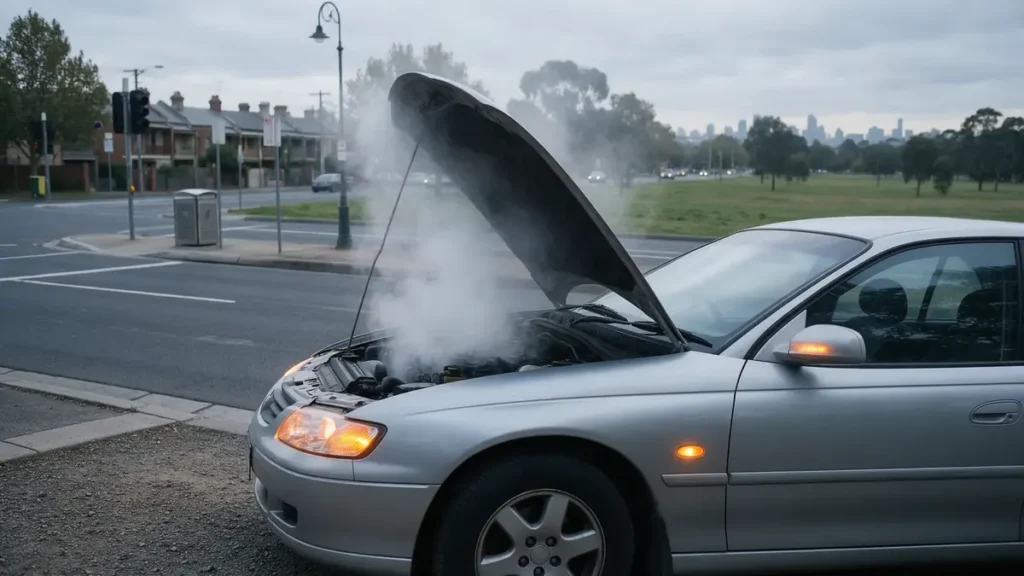
You can sell a car with a blown engine in Melbourne as it sits. Wreckers, auto recyclers, some licensed traders and a small pool of private buyers will take a non-running car, and a wrecker will usually tow it away for you. You do not need to fix the engine, get it running or drive it anywhere first.
The real decision is whether to repair or sell. Compare what the car would be worth fixed, minus the full repair bill, against what a buyer will pay for it broken. If the repair eats most of the repaired value, selling as-is wins. This guide walks through that maths, who buys non-runners, how to move a car that will not start, and the Victorian paperwork that protects you once it is gone.
What counts as a blown engine?
A “blown engine” is a loose term for internal engine failure that the owner cannot fix with a part swap. Mechanics use more specific diagnoses, and the diagnosis changes both the repair cost and what a buyer will pay.
Common types of engine failure include:
- Blown head gasket. Coolant mixes with oil (milky residue under the oil cap), white exhaust smoke, overheating, or bubbles in the radiator.
- Spun bearing or thrown rod. A heavy knocking that rises with revs, often followed by the engine stopping for good.
- Seized engine. The crankshaft will not turn, usually after running with no oil or severe overheating.
- Hydrolock. Water drawn into the cylinders, often after driving through floodwater, bending connecting rods.
- Snapped timing belt or chain on an interference engine. Valves hit pistons and the head is damaged.
A head gasket on a four-cylinder is sometimes worth repairing. A seized or holed block almost never is, because the fix becomes a replacement engine. Ask the mechanic who diagnosed it to write the fault down. That one line helps any buyer price the car accurately.
Repair or sell: the maths that decides it
Work out three numbers before you call anyone.
- Repaired value. What the car would sell for in good running order. Check comparable private listings for the same model, year and kilometres.
- Total cost to get there. The written repair quote, plus anything else the car needs to pass a roadworthy if you plan to sell it registered, plus towing to the workshop.
- As-is value. What buyers will pay for the car with the engine dead.
The car is worth repairing only when repaired value minus total cost is clearly higher than the as-is value. Add a margin for risk, because engine jobs often uncover more damage once the head comes off.
A worked example
Take an older small hatch that would sell for about $6,000 in running order. The workshop quotes $4,500 for a replacement engine, and the car also needs tyres and brakes for a roadworthy, say $900. That is $5,400 spent to own a $6,000 car, a margin of $600, before any surprises. If a wrecker’s as-is quote is anywhere near that margin, selling is the better result, and you skip weeks of waiting.
These figures are illustrative only. Your numbers depend on the make, model and fault, so use real quotes.
Why repair bills keep climbing
Repairs are getting dearer and slower. The Insurance Council of Australia reported that the average motor claim rose 32 per cent to $6,266 over the four years to 2026, driven by parts, labour and longer repair times. In the same ABC report, the Motor Trades Association of Australia estimated a 38,000-person shortfall of automotive technicians, which feeds into workshop wait times.
Car age matters too. The average registered passenger vehicle in Australia is around 11.2 years old, according to the federal Road Vehicles, Australia January 2024 report. For a car of that age, a new engine can cost more than the whole car is worth.
Signals that point one way or the other
| Lean towards repair | Lean towards selling as-is |
|---|---|
| Fault is a head gasket or external part, not internal damage | Engine is seized, holed or has thrown a rod |
| Car is late-model with low kilometres | Car is over ten years old or high kilometres |
| Body, gearbox and interior are in good shape | Car also has rust, panel damage or a tired gearbox |
| You plan to keep driving it for years | You were already thinking of replacing it |
| Repair quote is well under half the repaired value | Repair quote approaches or exceeds the repaired value |
Who buys cars with blown engines in Melbourne?
Four types of buyer take non-running cars. Each suits a different situation.
Wreckers and auto recyclers. They buy the car as-is, dismantle the parts that still have value, and recycle the metal. A dead engine matters less to them because the gearbox, panels, lights, interior, wheels and catalytic converter can all still sell. They also arrange the tow. If you want to understand how they price parts, read our guide on how to sell a car for parts in Melbourne.
Private buyers and enthusiasts. Home mechanics sometimes want a specific model with a dead engine, usually to fit a used engine themselves. This can pay more for popular or sought-after models. The trade-off is time, strangers inspecting the car, and paperwork. Consumer Affairs Victoria states that you must provide a roadworthy certificate less than 30 days old when selling a registered vehicle, and a car with a blown engine cannot pass one. In practice you would cancel the registration and sell it unregistered. Describe the fault honestly in the ad and in writing.
Licensed motor car traders. A dealer may accept a non-runner as a trade-in when you buy another car from them. Expect the offer to reflect their cost to repair or wholesale it.
Engine rebuilders and specialist workshops. These occasionally buy non-runners of models they specialise in. It is a narrow market and depends on the car.
For most Melbourne owners with an older, non-running car, a wrecker is the simplest route: one quote, one pickup, and no roadworthy needed once the registration is cancelled.
What a wrecker looks at when pricing a non-runner
A wrecker prices the car as a collection of parts plus its metal weight, so a blown engine does not make it worthless. Expect questions about:
- Make, model and year. Common models have steady demand for used parts.
- What still works. A sound gearbox, good panels, clean interior and undamaged glass all add value.
- Completeness. A car with its wheels, battery, catalytic converter and doors attached is worth more than a stripped shell.
- Keys and access. Keys, and whether a tow truck can reach the car, affect how easy the pickup is.
- Size and weight. Heavier vehicles carry more steel.
Give accurate answers and send clear photos. A quote built on the real condition is one that holds when the truck arrives. Our breakdown of how much wreckers pay for cars in Melbourne explains the pricing factors in more detail.
Towing a non-running car: rules and options
A non-runner has to be moved on a tow truck, a trailer, or behind another vehicle on a towline. Each option comes with limits.
Towline towing. Victoria’s Road Safety Road Rules 2017 allow one vehicle to tow another with a chain, rope, strap or wire. Under rule 295, the gap between the two cars must be no more than 4 metres. If the towline is longer than 2 metres, you must attach a white or brightly coloured flag at least 300 millimetres on each side, midway along the line, visible from 100 metres. In practice, someone has to sit in the towed car to steer and brake, so its brakes and steering must work. That makes it a short-distance option for a car with a working brake system, not a way to cross Melbourne.
When a towline will not work. A seized engine, a locked gearbox, flat tyres, a dead brake system or a car stuck in a tight driveway all rule out towline towing. A tilt-tray tow truck winches the car on and carries it with all wheels off the road.
Unregistered cars. Once you cancel the registration, the car cannot be driven on the road, even if it limps. Plan for the buyer to collect it.
Getting ready for pickup. Clear a path to the car, leave the keys with it, and tell the buyer if the wheels will not roll or the handbrake is stuck. Remove your personal items, toll tag and garage remote.
Paperwork to finish before the car leaves
The paperwork protects you from fines, tolls and registration fees on a car you no longer own.
- Cancel the registration and remove the plates. VicRoads tells owners to remove the number plates and cancel the registration before selling a vehicle to an auto wrecker. You can do it through myVicRoads. Custom plates you want to keep need a phone call to VicRoads first.
- Claim any registration refund. If there is time left on the rego, you may get a refund. VicRoads asks for a photo of the number plate cut in half (or an insurance report or wrecker’s receipt for a written-off car), and deducts a $22.10 processing fee plus 10 per cent of the TAC charge.
- Bring photo ID. Scrap metal dealers in Victoria must record the seller’s identification.
- Expect payment by bank transfer. Since 30 May 2018, Victorian scrap metal dealers have been banned from paying cash for scrap metal, including vehicles bought for recycling. Payment is by electronic funds transfer or non-transferable cheque. Treat any promise of “cash in hand” for a scrap car as a warning sign.
- Clear any finance. If a loan is secured over the car, the lender has to be paid out or agree before you sell.
Our checklist of the documents needed to sell a car to a wrecker in Victoria covers deceased estates, missing papers and cars not in your name.
Mistakes that cost owners money
- Driving it “just to the mechanic”. Running an engine with a failed head gasket or low oil pressure turns a repairable fault into a seized block.
- Masking the fault. Sealant additives and thick oil can hide symptoms for a test drive. That invites a dispute later and does nothing for a wrecker’s price.
- Stripping parts before getting a quote. Pulling the battery, wheels or catalytic converter usually lowers the offer by more than those parts fetch separately.
- Leaving the rego active. An unused registration keeps your name attached to the car and wastes refundable money.
- Paying for diagnostics you do not need. If the car is clearly heading for a wrecker, an engine teardown only adds cost.
Frequently asked questions
Can I sell a car with a blown engine privately in Victoria?
Yes, but a registered car sold privately needs a roadworthy certificate less than 30 days old, which a blown engine will fail. Most owners cancel the registration and sell the car unregistered, describing the engine fault in writing. Our guide to selling an unregistered car in Victoria explains that process.
Is it worth replacing the engine in an old car?
Usually not when the replacement cost approaches the car’s running value. Get a written quote, add any other roadworthy work, and compare that total with the repaired value and the as-is offer. Replace the engine only if the remaining margin is clearly worth the risk.
Do I need a roadworthy certificate to sell a non-running car to a wrecker?
No, not when you cancel the registration first, which VicRoads asks you to do before selling to an auto wrecker. The roadworthy requirement applies to transferring a registered vehicle.
Can a wrecker collect a car that will not roll?
Yes. A tilt-tray truck winches the car onto the tray, so seized wheels, flat tyres or a locked gearbox are not a barrier. Tell the buyer about access issues when you ask for a quote.
The bottom line on a dead engine
A blown engine rarely justifies a big repair on an older car, and the numbers make that obvious once you write them down. Get a written diagnosis, compare the repair total with the as-is offer, then cancel the rego and let the buyer handle the tow. If you are ready to move a non-running car, see how our junk car towing and pickup service works, or request a quote for your blown-engine car with the make, model and fault details.
Let’s Get It Sorted
Ready to Talk Through Your Project?
Share the details with our team and take the next step.
Call today:
0493 825 076